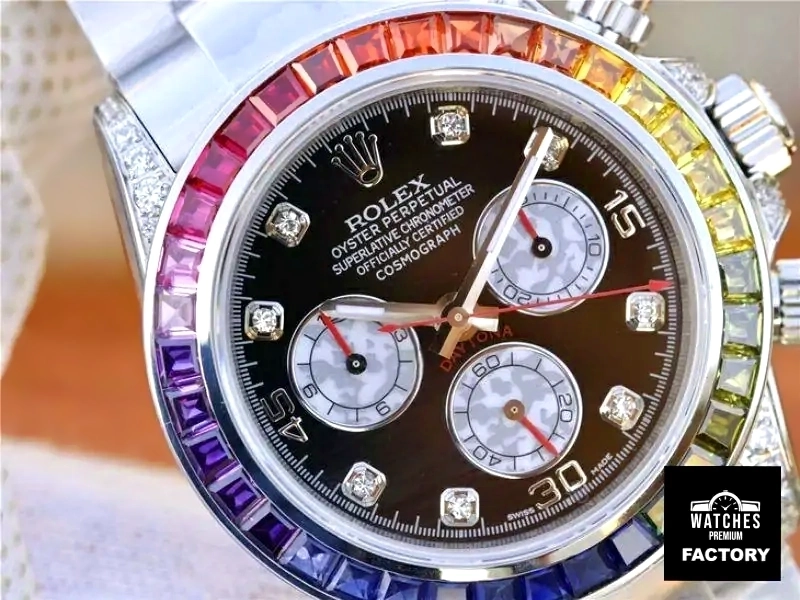
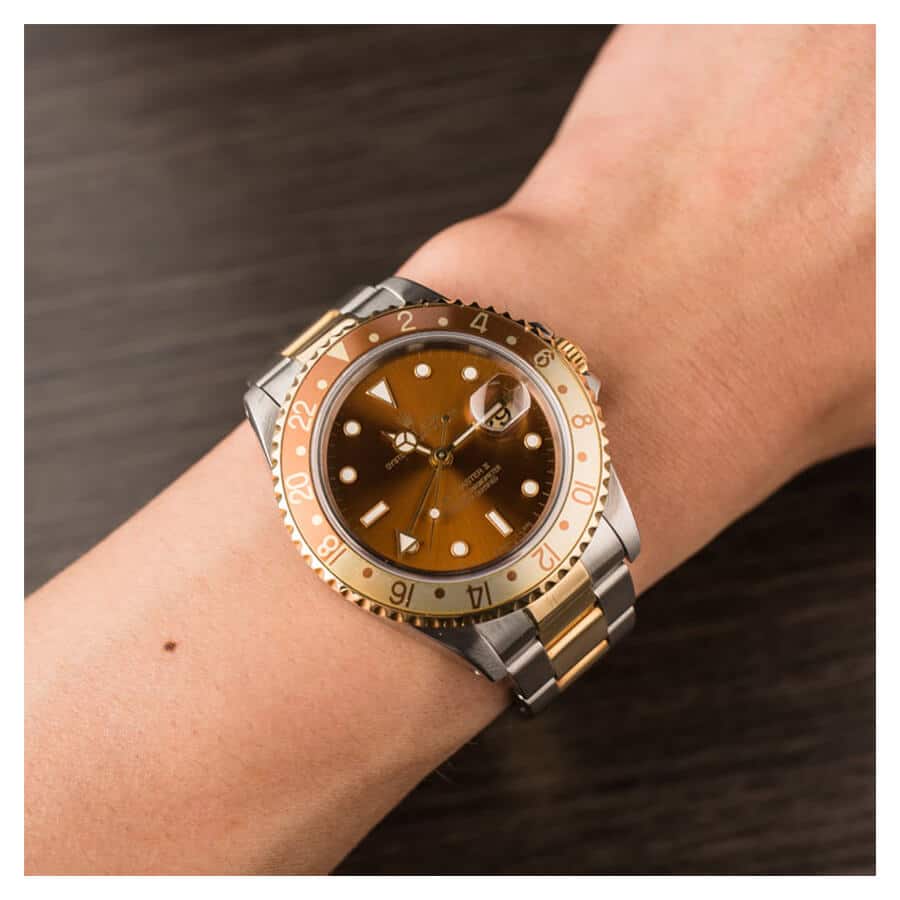
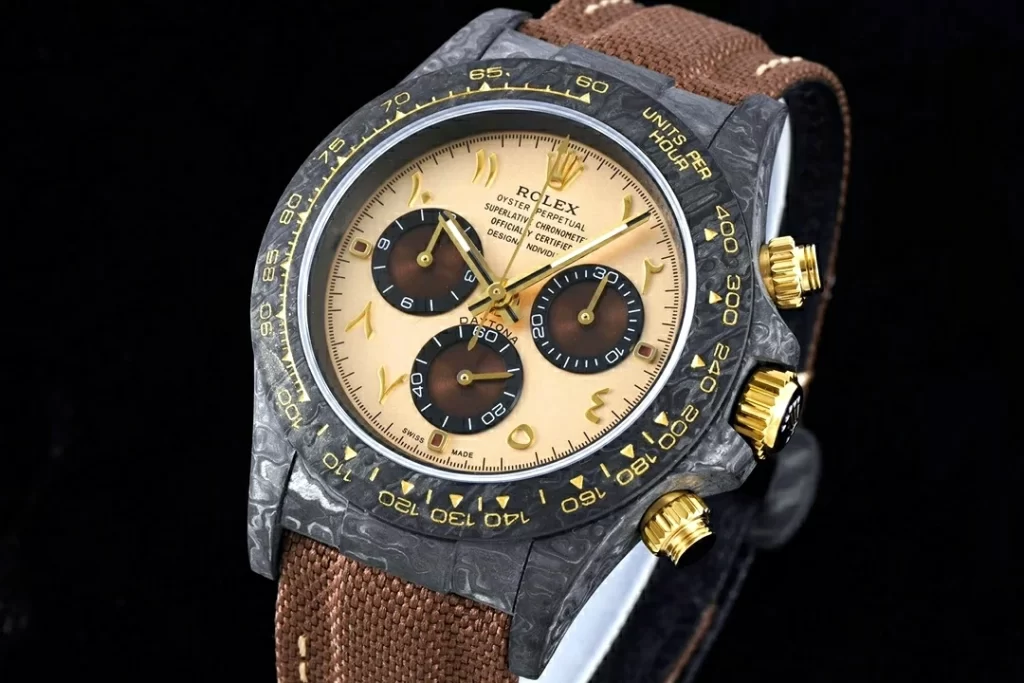
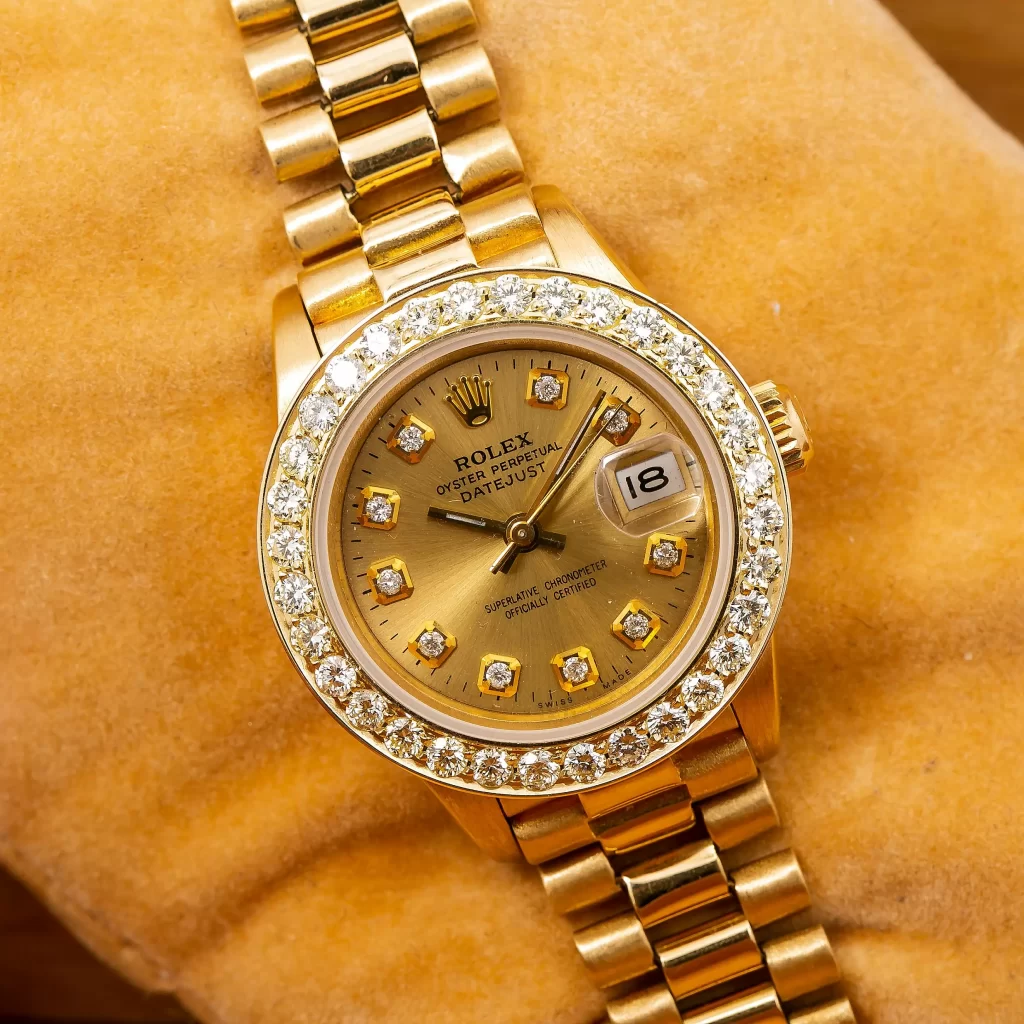
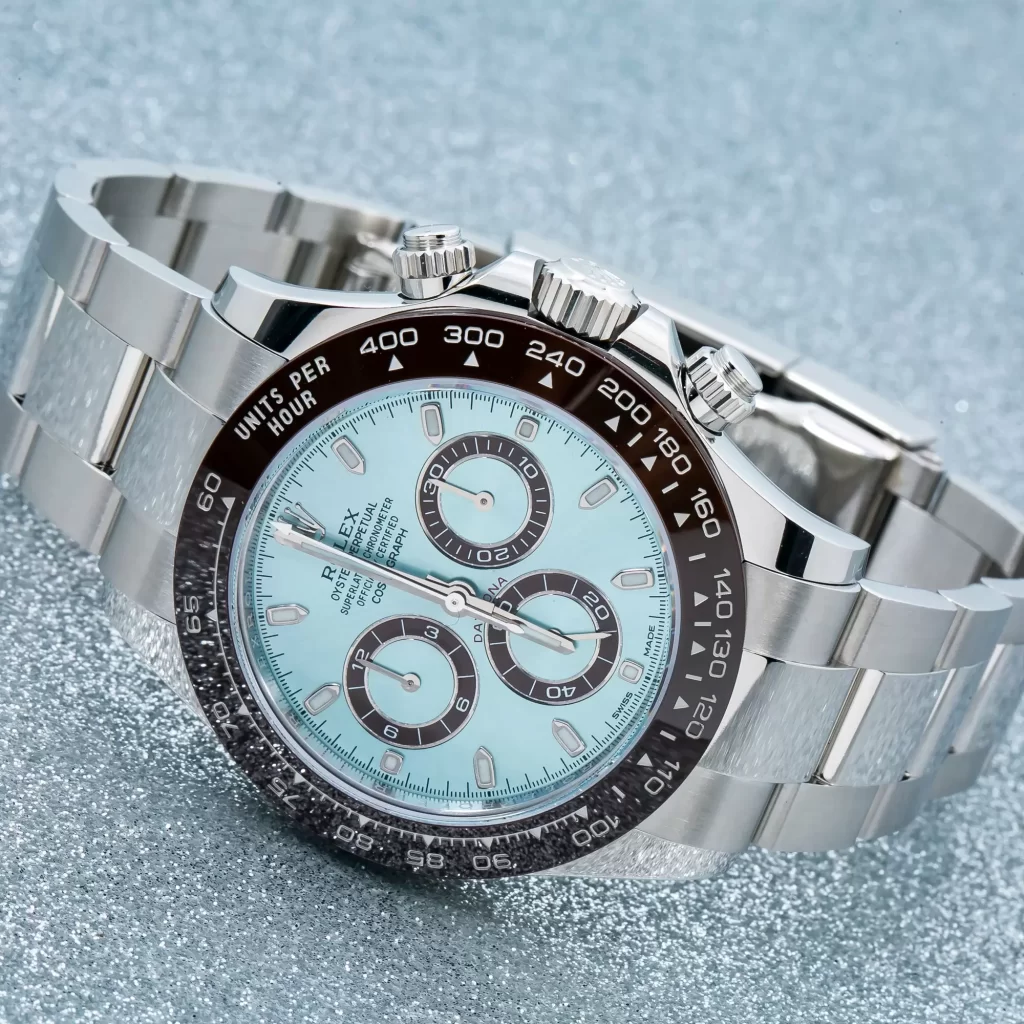
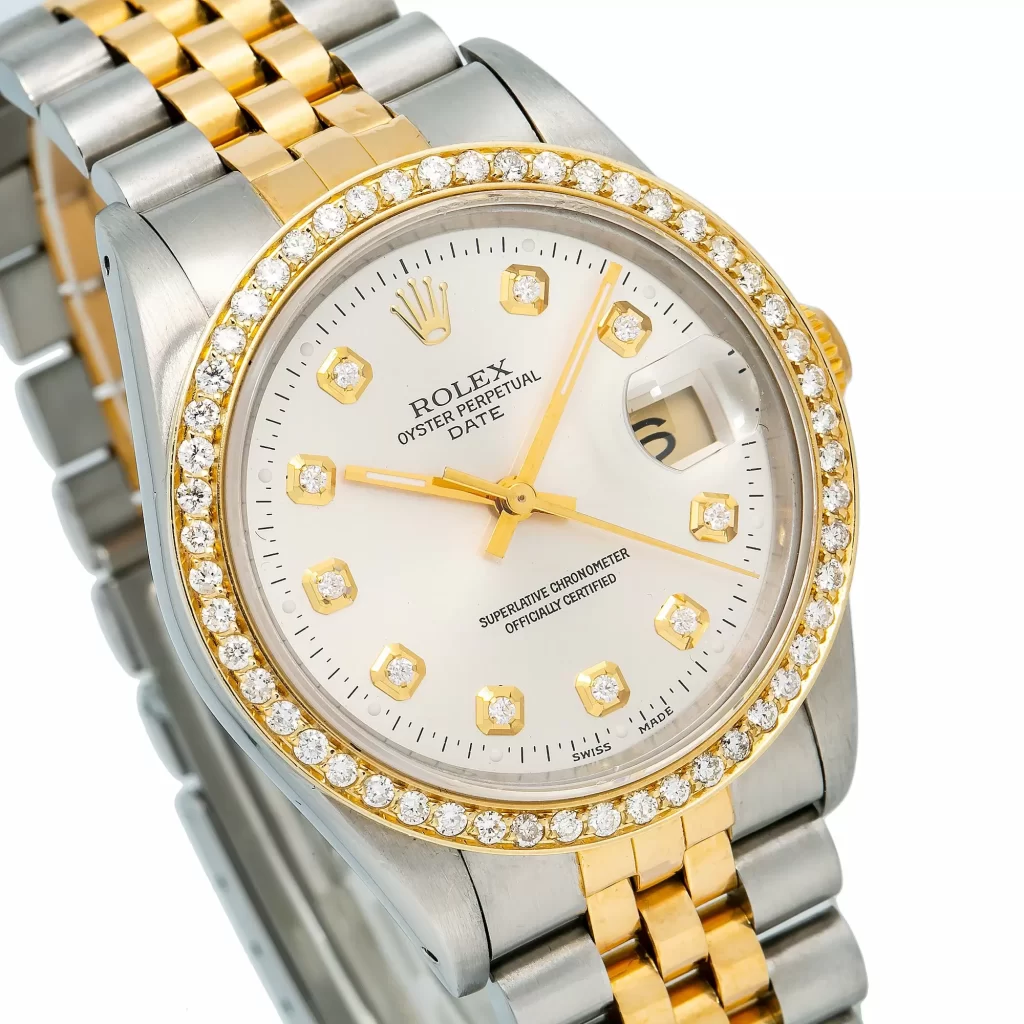
Rolex used Watches Market Geneva 2026 to celebrate one of the most important milestones in its history: the 100th anniversary of the Oyster, the waterproof wristwatch that helped define the modern Rolex. Rather than marking the occasion with radical redesigns or entirely new collections, the company chose a more measured approach—refining familiar models while introducing subtle nods to the Oyster’s century-long legacy.
The result is a collection that feels intentionally conservative. Yet beneath that restraint are several noteworthy developments, including commemorative design details, new materials, updated technical standards, and a handful of genuinely unexpected releases.
A Centennial Focus on the Oyster Every new Rolex unveiled this year belongs to the Oyster Perpetual family, underscoring the significance of the Oyster’s centenary. First introduced in 1926, the Oyster established Rolex’s reputation for durable, water-resistant wristwatches and remains the foundation of much of the company’s catalog.
The anniversary theme extends beyond aesthetics. Rolex also announced three new testing criteria for its Superlative Chronometer Certification: resistance to magnetism, reliability, and sustainability. According to the company, these standards are now incorporated earlier in the design and manufacturing process rather than being evaluated solely through final testing.
While Rolex has not disclosed all of the technical details behind these new benchmarks, the move reflects broader trends within the luxury watch industry, where long-term durability and resistance to modern environmental factors—particularly magnetic fields generated by everyday electronics—have become increasingly important.
The Oyster Perpetual 41 Becomes the Collection’s Historical Centerpiece Among the anniversary releases, the Oyster Perpetual 41 serves as the clearest tribute to the original Oyster.
The watch features a slate dial accented by Rolex green and is offered in yellow Rolesor, Rolex’s combination of Oystersteel and gold. More significant than its materials, however, are the commemorative details. The winding crown bears a “100” motif, while the traditional “Swiss Made” designation beneath six o’clock has been replaced by “100 years.”
For Rolex, a brand known for preserving design continuity, such changes are unusual. The watch does not rely on dramatic styling to celebrate the milestone. Instead, it communicates its significance through details that experienced collectors will immediately recognize.
A Rare Moment of Playfulness If the Oyster Perpetual 41 represents Rolex’s heritage, the new Oyster Perpetual 36 showcases a side of the brand rarely seen.
Its multicolored Jubilee-pattern dial uses individually applied lacquer colors and repeatedly incorporates the Rolex name into the design. While colorful dials have become increasingly popular across the luxury watch industry, Rolex has generally approached such experimentation cautiously.
The result is one of the collection’s most distinctive releases—not because it introduces new technology, but because it demonstrates a willingness to inject personality into one of the brand’s most traditional product lines.
Quiet Luxury in Precious Metal The Oyster Perpetual 28mm and Oyster Perpetual 34mm continue a trend that has gained momentum across luxury goods: understated use of precious materials.
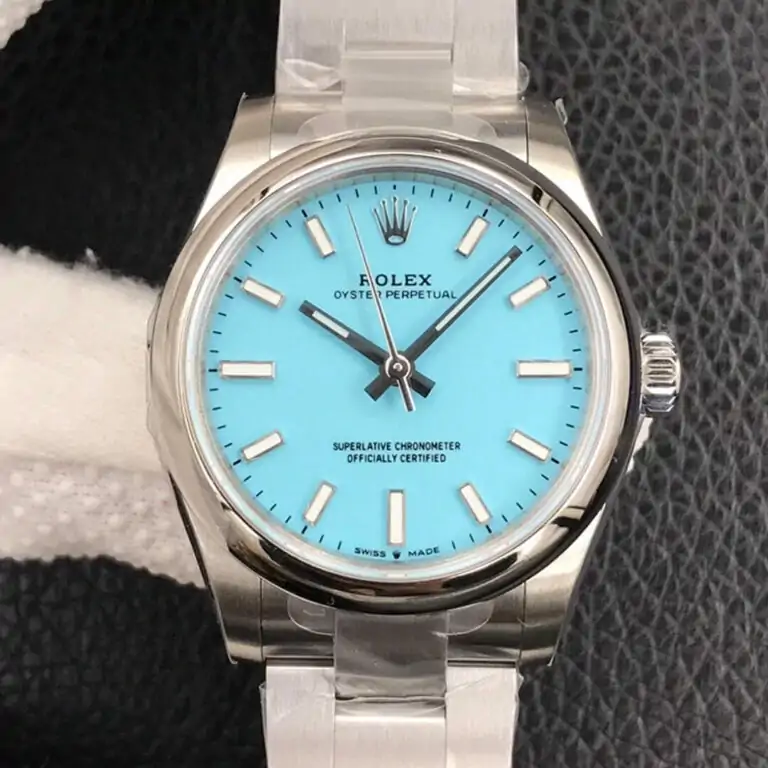
The 28 mm model pairs 18-karat yellow gold with a green stone-lacquer dial, while the 34 mm version combines Everose gold with a blue stone-lacquer dial. Satin-finished bracelets soften the visual impact of the gold, creating a more restrained appearance than highly polished precious-metal sports watches.
Perhaps more interesting is Rolex’s decision to introduce natural stone hour markers at three, six, and nine o’clock for the first time. While a relatively small detail, it signals Rolex’s continued exploration of natural materials without abandoning the durability and practicality that define the Oyster line.
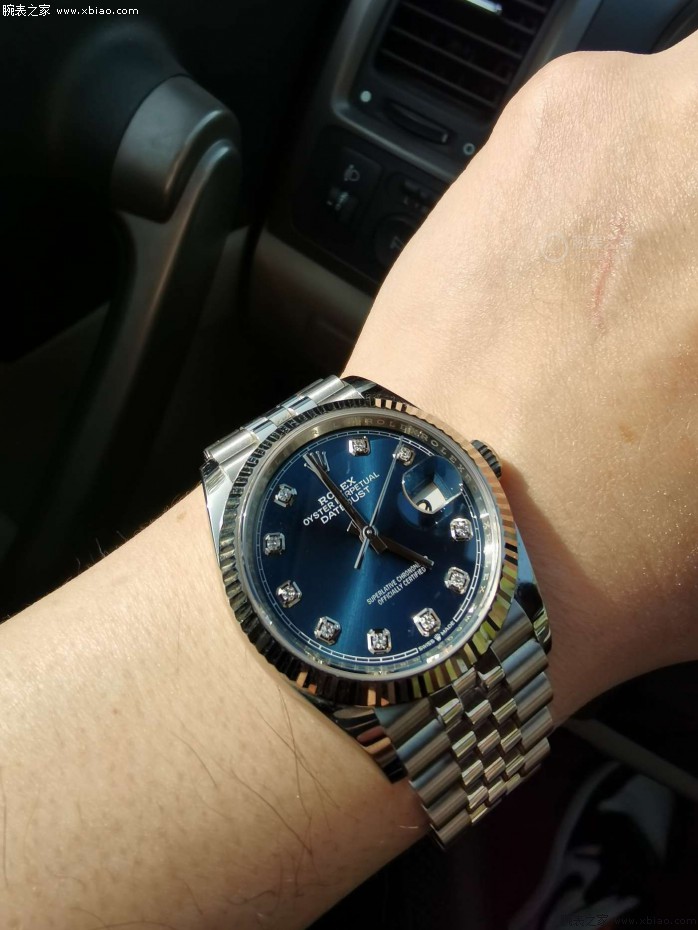
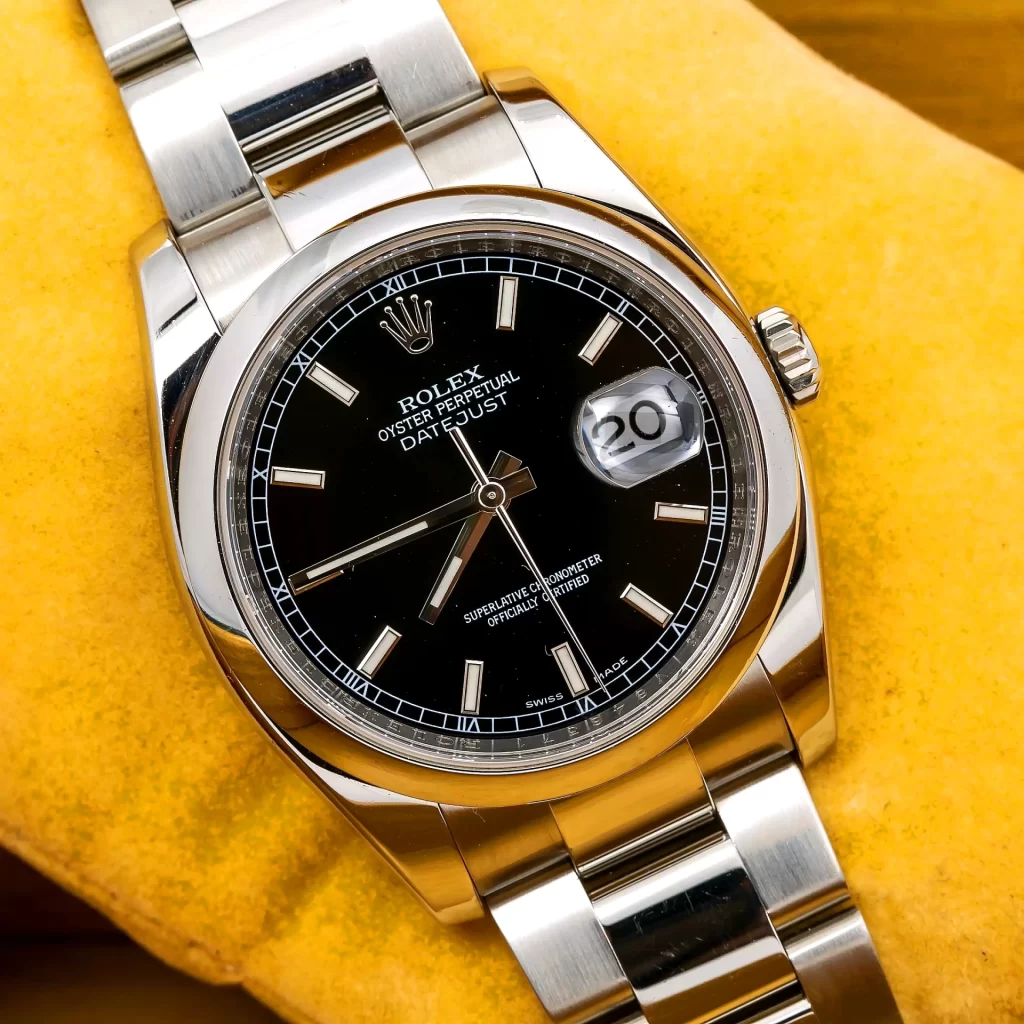
A Stronger Identity for the Datejust 41 The replica Rolex Datejust remains one of Rolex’s most recognizable watches, and the latest version leans into that identity.
The new white Rolesor model combines a green ombré lacquer dial with the fluted bezel that has become synonymous with the collection. Green has long been associated with Rolex branding, making its use here feel deliberate rather than decorative.
The revised dial architecture also improves contrast around the date aperture, enhancing one of the model’s most practical functions. While hardly revolutionary, the refinement demonstrates Rolex’s longstanding approach to product development: incremental improvements that accumulate over time.
The Yacht-Master II Finally Gets a Meaningful Refresh The most significant functional update in the 2026 lineup may belong to the Yacht-Master II.
Since its introduction, the Yacht-Master II has occupied an unusual position within Rolex’s catalog. Its programmable regatta countdown was technically impressive but often criticized for complexity and visual clutter.
The redesigned model addresses both concerns. Rolex has simplified operation by reworking the countdown programming system and improving display legibility. The countdown hands now rotate counterclockwise, making remaining time more intuitive to read during race starts.
Just as important, the dial itself has been simplified. Larger markers and cleaner visual organization bring the Yacht-Master II closer to the design language of Rolex’s broader professional watch collection.
For sailors, the practical improvements matter. For everyone else, the redesign makes one of Rolex’s most specialized watches easier to understand and appreciate.
New Materials Take Center Stage Several releases highlight Rolex’s ongoing investment in proprietary materials.
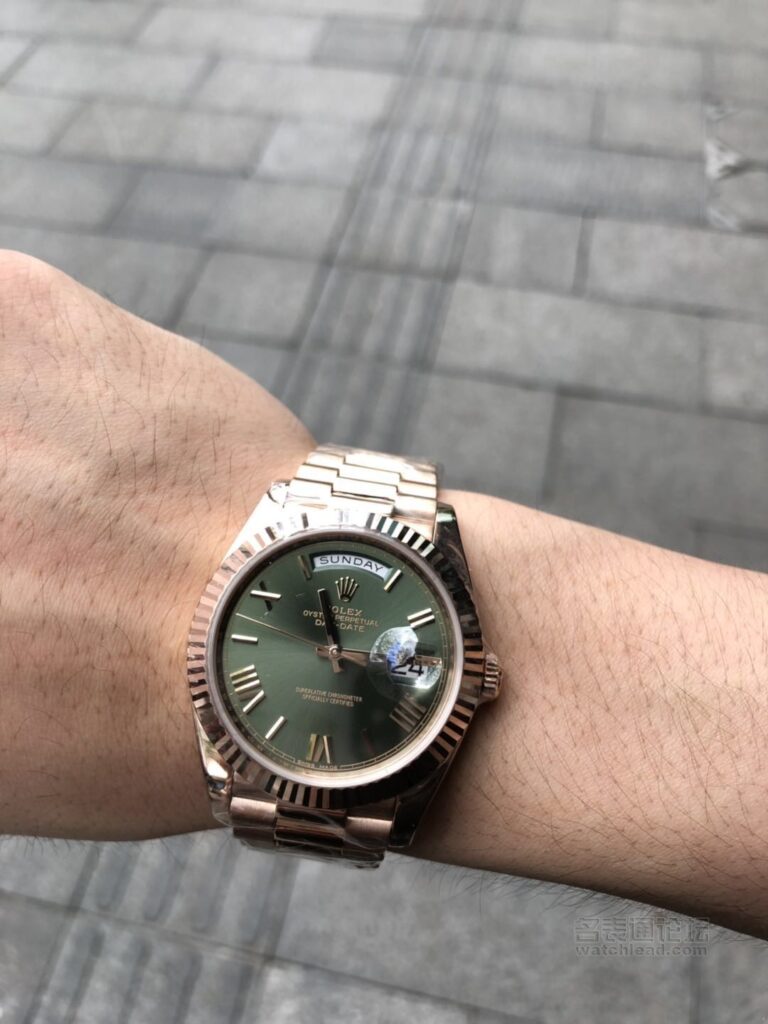
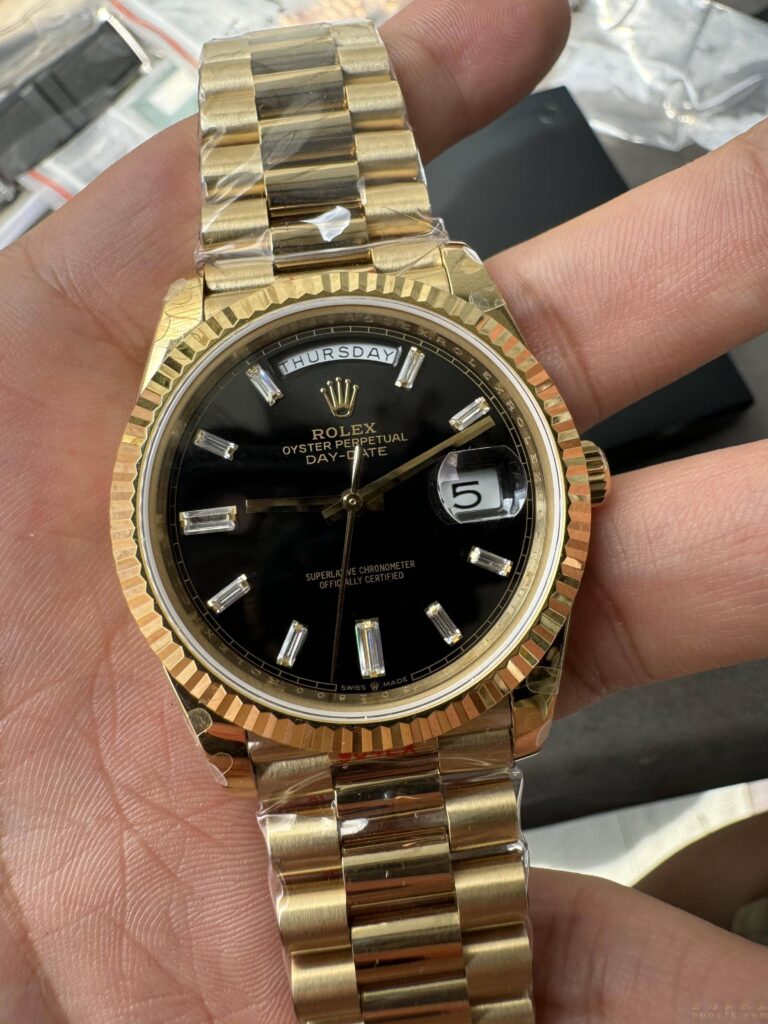
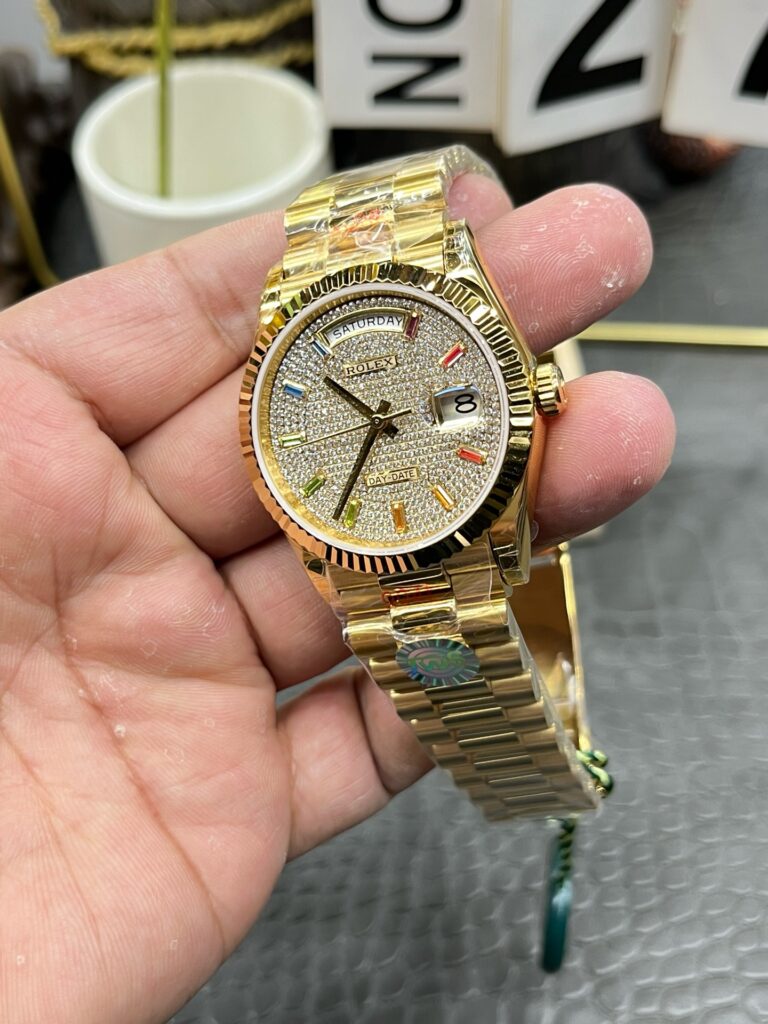
The Rolex Day-Date 40 introduces Jubilee Gold, a newly developed in-house alloy described as combining subtle yellow, gray, and pink tones. Paired with a light green aventurine dial, the watch emphasizes craftsmanship and metallurgy rather than mechanical innovation.
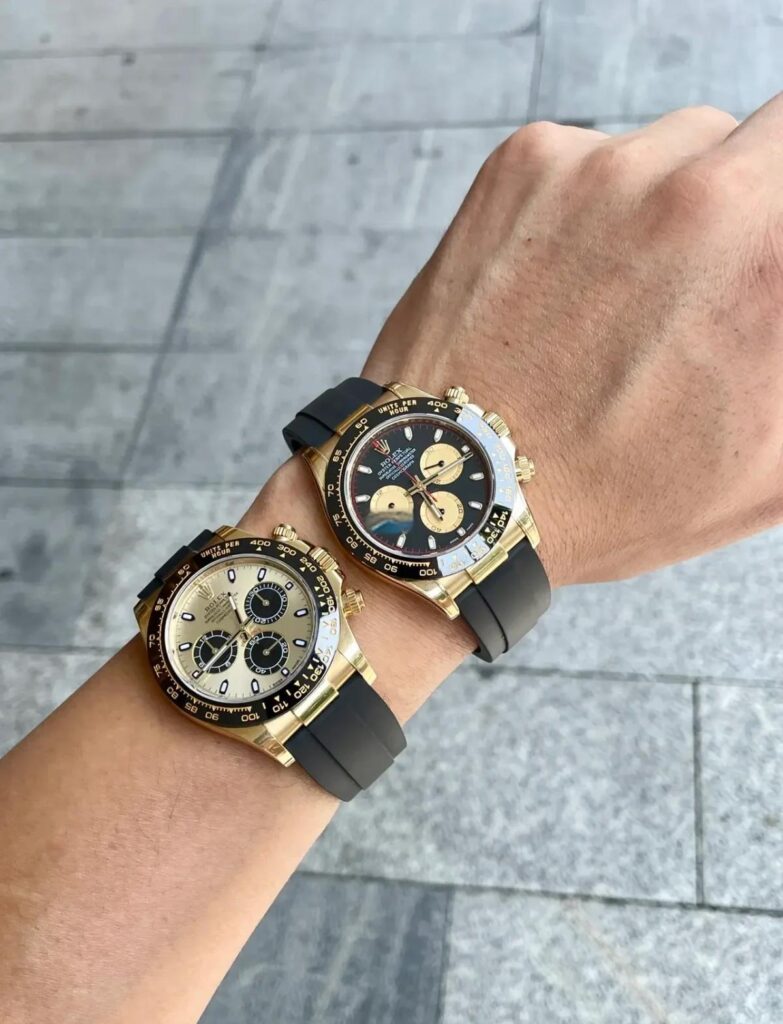
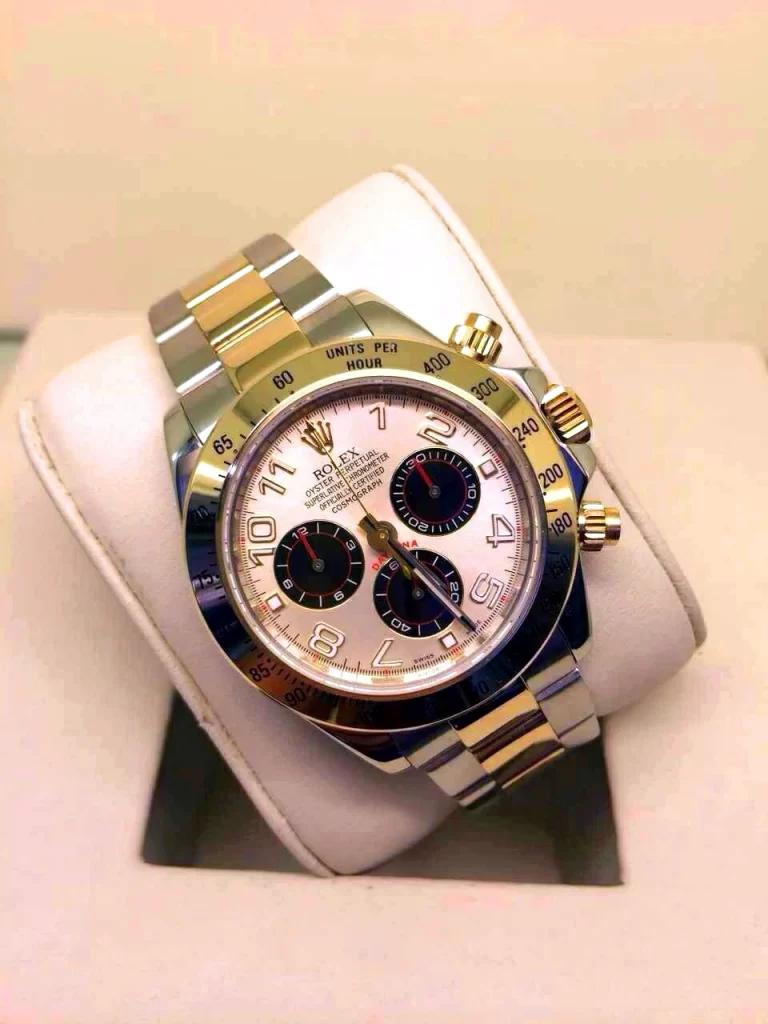
Meanwhile, the Cosmograph Daytona expands into Rolesium, Rolex’s combination of Oystersteel and platinum. The new version pairs a platinum bezel with a white enamel dial and features an exhibition caseback that reveals the movement beneath sapphire crystal.
While these changes may appear modest on paper, they reflect Rolex’s typical product strategy. Rather than reinventing iconic models, the company refines materials, finishing, and construction while preserving the visual identity collectors expect.
What the 2026 Collection Reveals About Rolex The most striking aspect of Rolex’s 2026 lineup is not any individual watch. It is the company’s decision to celebrate a century of the Oyster without dramatically altering the formula that made it successful.
Some collectors may have expected a more ambitious anniversary collection. Instead, Rolex chose evolution over disruption. The commemorative Oyster Perpetual 41 honors the past, the colorful Oyster Perpetual 36 introduces an element of surprise, and the Yacht-Master II receives long-awaited functional improvements. Elsewhere, new alloys, materials, and finishing techniques demonstrate continued investment in craftsmanship.
Viewed together, the collection reflects a philosophy that has defined Rolex for decades: meaningful progress achieved through careful refinement rather than constant reinvention. In an industry increasingly driven by novelty, that restraint may be the most Rolex decision of all.
Rolex season always brings the same cycle: leaks, rumors, overconfident predictions, and collectors convincing themselves they absolutely need a watch they hadn’t even considered two weeks earlier. It happens every year. And somehow, Rolex still manages to surprise people anyway.
That unpredictability is part of the reason the brand dominates replica watch conversation so completely. Few companies can release a slightly different bezel color and trigger months of debate across forums, Instagram, Reddit, and dealer networks.
So, with Watches & Wonders approaching, here are a few Rolex predictions that actually feel plausible this year. Some are based on patents and market behavior. Others are just educated guesses. And honestly, with Rolex, instinct matters more than people like to admit.
The Possible End of the Pepsi — Or Maybe Just the Beginning Again
People have predicted the death of the blue-and-red GMT-Master II almost every year since the modern ceramic “Pepsi” arrived in 2018. Usually, those rumors go nowhere.
This year feels different.
Collectors have noticed the model quietly disappearing from some authorized dealer listings, and several buyers have reported being told that allocations have slowed dramatically. That doesn’t guarantee discontinuation, of course. Rolex rarely explains anything directly. Still, the smoke is getting harder to ignore.
Current GMT-Master II Lineup
Model
Bezel Color
Bracelet Options
Notes
Pepsi
Blue/Red
Jubilee, Oyster
Hardest steel GMT to obtain
Batman
Blue/Black
Jubilee, Oyster
Extremely popular daily GMT
Sprite
Green/Black
Jubilee, Oyster
Left-handed crown layout
Root Beer
Brown/Black
Oyster
Rolesor and Everose versions
If the Pepsi does disappear, I don’t think Rolex leaves that space empty for long.
And no, I don’t buy the theory that Rolex would intentionally remove one of its most talked-about watches just because demand got too high. That’s more of a Patek Philippe move. Rolex has historically seemed perfectly comfortable allowing certain references to become nearly impossible to buy at retail.
So what replaces it?
Probably not a fully redesigned GMT-Master II generation. That feels too aggressive right now. More likely, Rolex refines the existing formula: stronger bezel colors, maybe a revised ceramic dial treatment similar to what appeared on the green-dial “Sprite,” and a few small technical tweaks hidden beneath the surface.
Honestly, that alone would be enough to restart the frenzy.
The Land-Dweller Still Feels Like Rolex Testing People
The Land-Dweller remains one of the most divisive Rolex launches in recent memory.
Oddly enough, many collectors seem to agree on the same thing: the bracelet looks fantastic. The integrated design works. The overall profile feels modern without trying too hard.
Then the conversation usually crashes into the dial.
The oversized numerals — especially the “3” and “6” — continue to split opinions. And the name? I’ve genuinely struggled to find anyone enthusiastic about “Land-Dweller.” It sounds more like a concept SUV than a Rolex sports watch.
Still, people expecting Rolex to immediately redesign the dial probably misunderstand how the brand operates.
Rolex almost never backs away from a new design after one year. If anything, the company tends to double down and wait for collectors to slowly adjust. The same thing happened with the Rolex Sky-Dweller years ago. Early reactions were mixed, and now it has one of the strongest followings in the catalog.
What does seem realistic is a new dial color that changes perception overnight.
A dark blue, black, or deep green Land-Dweller could completely transform the watch. Sometimes color fixes everything. It sounds simplistic, but we’ve seen it happen before.
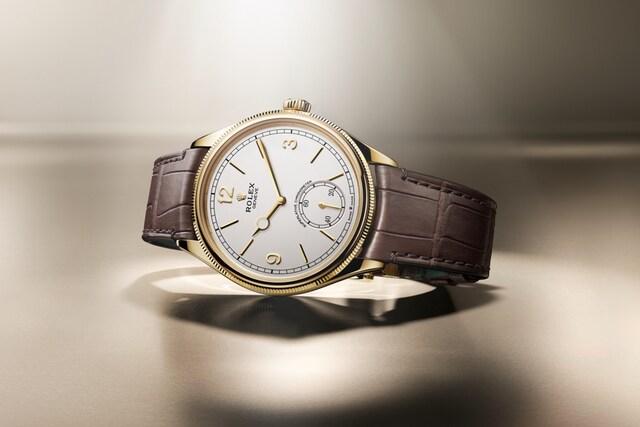
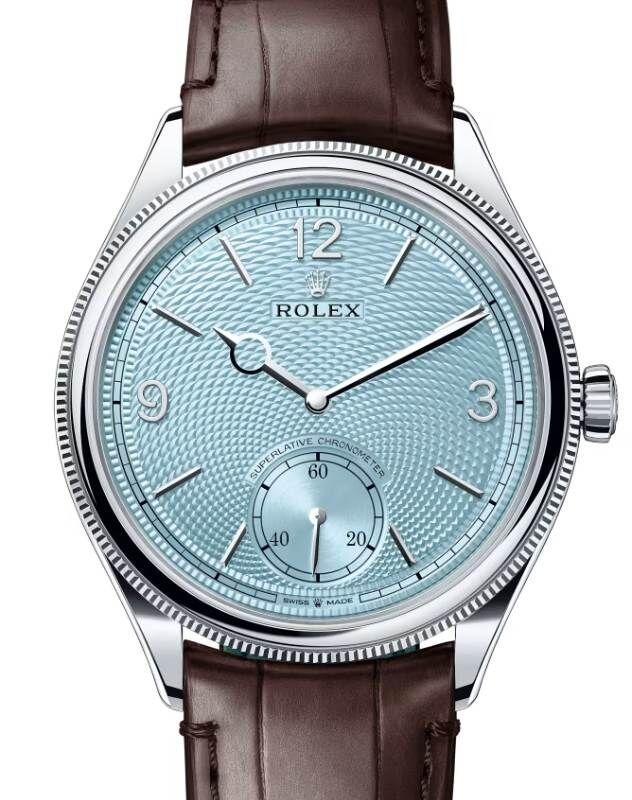
The 1908 line is a good example. Initial reactions were fairly restrained when Rolex introduced it in 2023. Then the platinum ice-blue guilloché version arrived, and suddenly collectors who ignored the model were paying attention.
Watch enthusiasm can be irrational like that. One dial texture and everybody changes sides.
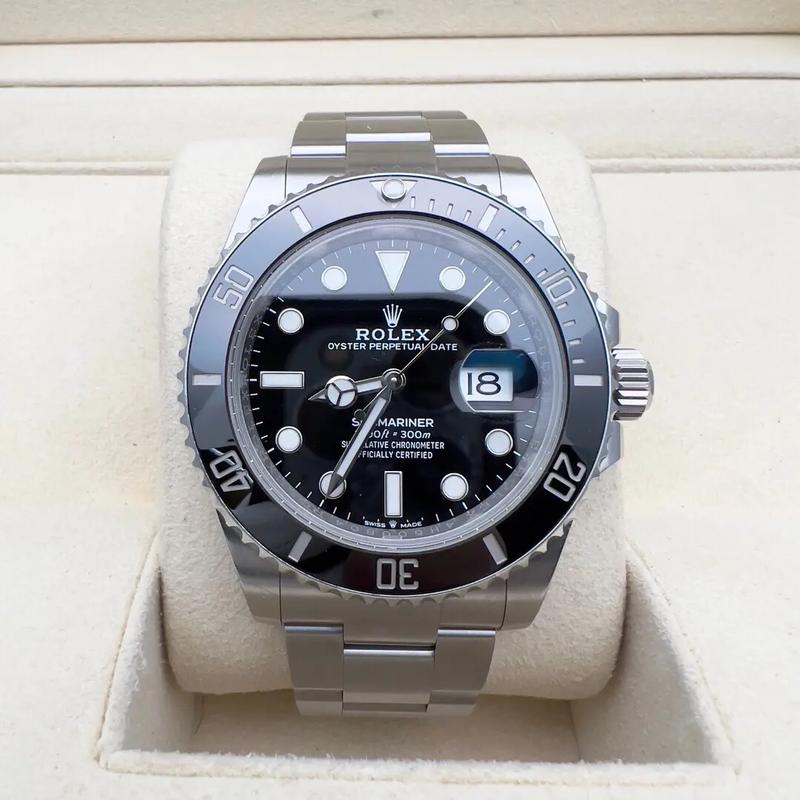
Why an All-Blue Steel Submariner Suddenly Feels Possible
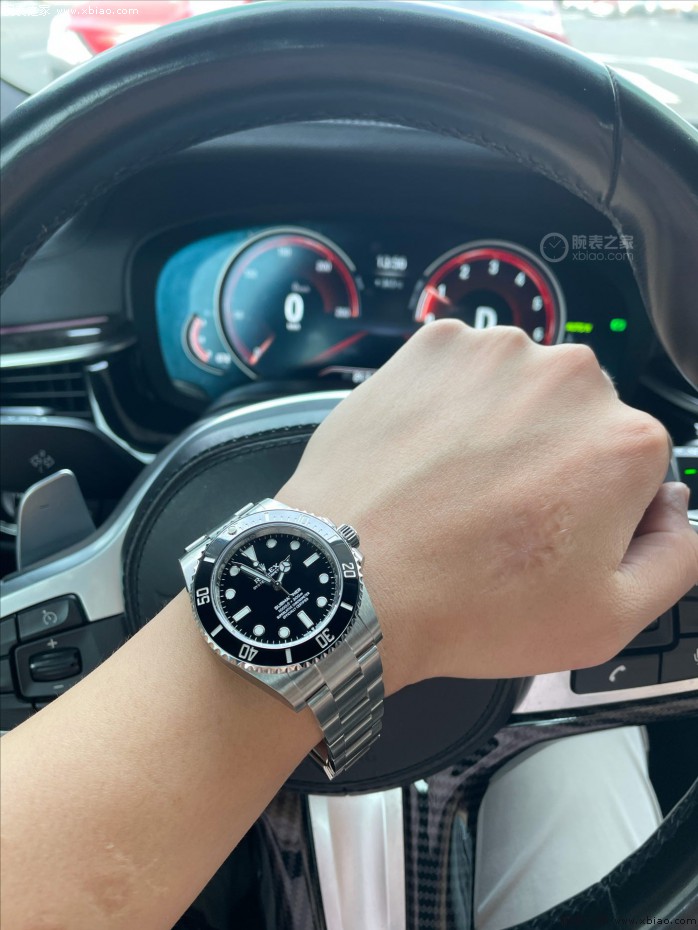
It’s actually a little surprising that replica Rolex hasn’t done more with the modern Submariner lineup since the 2020 refresh.
Outside of the subtle “Starbucks” bezel update in 2023, the range has remained remarkably stable. For Rolex’s flagship sports watch, that’s a fairly long quiet period.
Here’s the current situation:
Submariner Color Configurations
Material
Dial
Bezel
Steel
Black
Black or Green
Yellow Gold
Black or Blue
Matching
Rolesor
Black or Blue
Matching
White Gold
Black
Blue
That leaves one pretty obvious gap: a steel Submariner with both a blue dial and blue bezel.
Rolex already has the components. That’s the funny part. The company wouldn’t need some dramatic redesign or anniversary edition. It could basically reshuffle existing elements and create one of the hottest releases of the year overnight.
Would purists complain? Absolutely.
Would waiting lists become absurd within days? Also yes.
And honestly, a blue steel Sub feels almost inevitable at some point.
The “1908 Padellone” Theory Actually Makes Sense
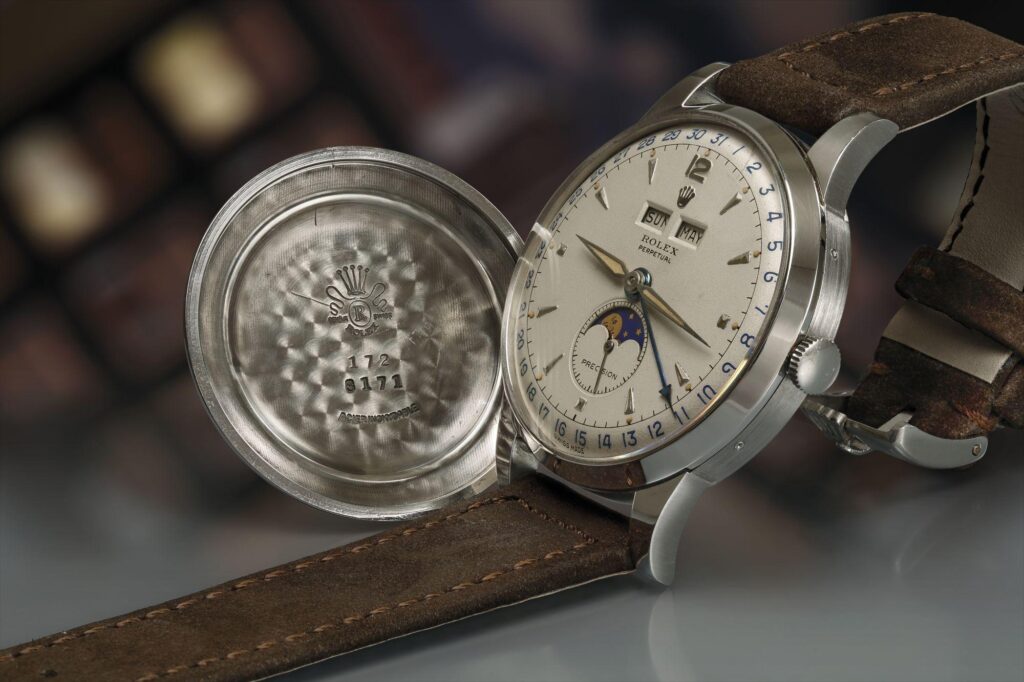
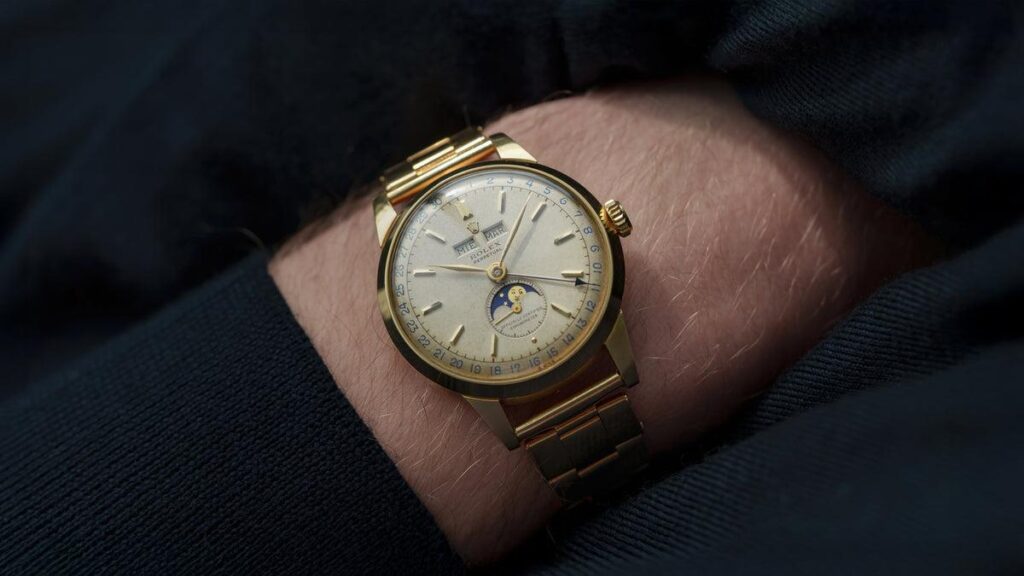
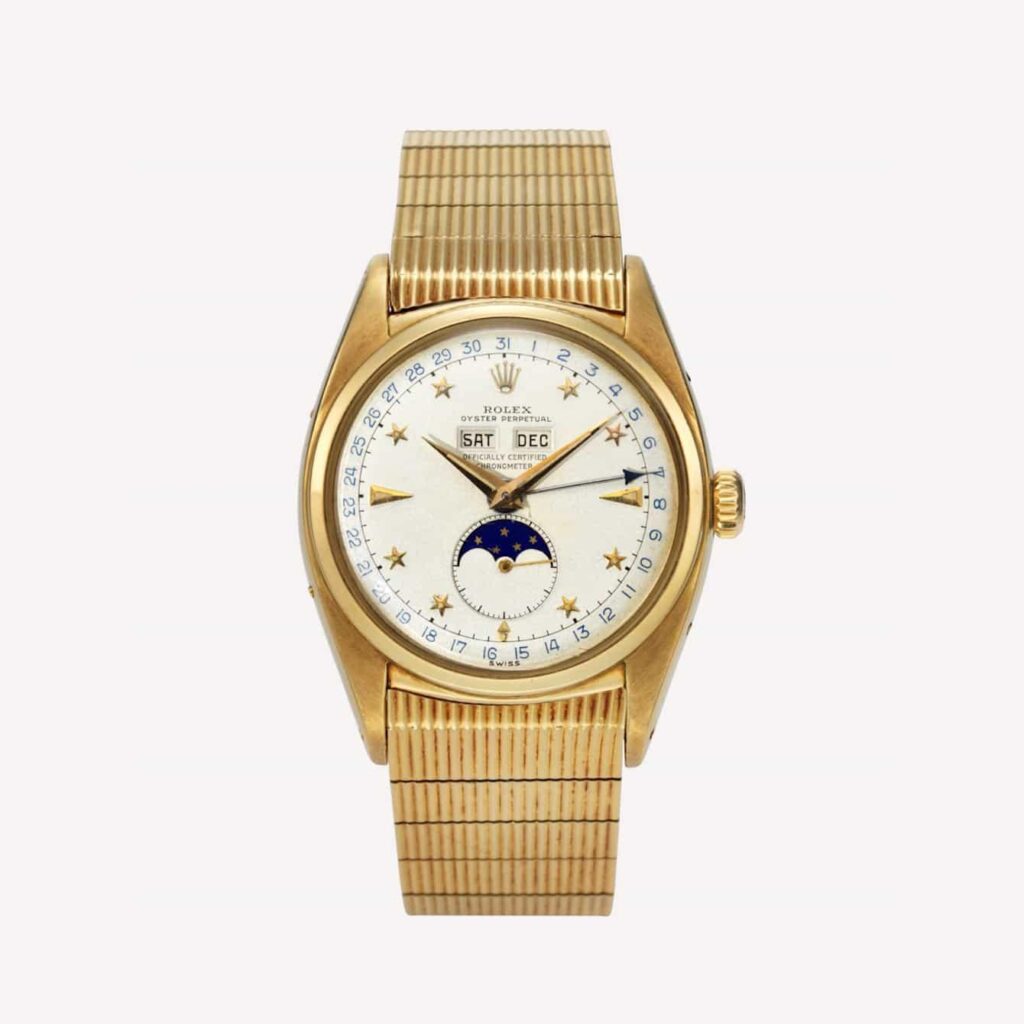
Last year, several watch publications discussed a newly uncovered Rolex patent related to a triple-calendar movement. Some reports even noted the appearance of the name “Padellone,” the famous nickname collectors gave to the vintage ref. 8171 from the 1950s.
For vintage Rolex enthusiasts, that reference carries serious weight.
5
The old Padellone watches have become hugely collectible over the years, partly because Rolex almost never ventured deeply into complicated calendar watches afterward. That’s one reason pieces like the Rolex 6062 became so historically important.
Still, I doubt Rolex launches an entirely separate “Padellone” collection.
The more believable scenario is a complicated version of the 1908. The proportions, dress-watch styling, and vintage influence already align naturally with the idea. A “1908 Padellone” would let Rolex introduce a major complication without creating another completely new product family only a year after launching the Land-Dweller.
And frankly, the 1908 line probably needs something like this.
Right now, it still feels slightly disconnected from the rest of the catalog. A triple-calendar model would instantly give the collection more identity.
Titanium Yacht-Master: Rolex May Not Be Finished Yet
When Rolex introduced the titanium Yacht-Master 42 in 2023, reactions were cautious at first.
Then people actually wore it.
That changed everything.
The lightweight feel, muted finish, and surprisingly wearable proportions helped turn the watch into one of Rolex’s more quietly successful modern releases. More importantly, it achieved something few expected: it made collectors seriously interested in the Yacht-Master again.
That matters because the Yacht-Master has often lived in the shadow of the Submariner and GMT-Master II.
Yacht-Master Titanium Possibilities
Potential Release
Why It Makes Sense
40mm Titanium Yacht-Master
Broader everyday appeal
37mm Titanium Yacht-Master
Expands titanium into smaller sizing
Slate Dial 42mm
Matches titanium’s cooler tone
Matte Black Variant
More modern sports aesthetic
A lot of people assumed Rolex would immediately spread titanium across the entire Professional collection. Maybe eventually. But Rolex tends to move slower than enthusiasts expect.
Instead, expanding the Yacht-Master titanium lineup feels more believable right now.
And honestly, a slate-dial titanium Yacht-Master sounds pretty convincing. The cool gray tones would work extremely well together.
The Most Interesting Rolex Story Might Actually Be the Patent
New Rolex models get attention. Patents, though, sometimes reveal where the company is thinking years ahead.
One recent patent filing is especially strange.
According to reporting from watch researchers and patent enthusiasts, the filing describes a case construction involving a porous metal or ceramic structure filled with a secondary material — potentially rubber-like polymers or elastomers. The design appears to create a reinforced monobloc-style structure rather than a traditional multi-part Oyster case.
That’s a pretty radical idea for Rolex.
The classic Oyster case, first patented in 1926, is one of the foundational inventions of modern waterproof watchmaking. Rolex rarely moves far away from that formula. Which is why this filing stands out.
5
The patent language gets extremely technical — discussions of elastomers, amorphous alloys, injection temperatures, reinforcement structures, and lattice-style channels. Reading it almost feels more like aerospace engineering than watchmaking.
But the broader idea seems fairly clear.
Rolex may be experimenting with a lighter, stronger, more shock-resistant case architecture that combines rigid external materials with flexible internal reinforcement.
And if that sounds familiar, that’s because watches like the Norqain Wild ONE already explore similar concepts using rubber shock absorbers and composite shells.
The difference is that Rolex would likely approach it in a far more industrialized and long-term way.
Now, does this patent guarantee production? Not even close.
Rolex files enormous numbers of patents that never become real watches. Some exist purely to secure manufacturing concepts or future possibilities. Others disappear entirely.
Still, this one feels unusually specific.
If Rolex does pursue the idea, it could point toward a future generation of ultra-rugged luxury sports watches — something sitting somewhere between traditional Swiss luxury and true high-performance tool watch engineering.
In a world where geopolitical tension often shapes international relations, sometimes the most telling symbols of power and identity are the smallest details. Watches, for instance, have long been more than mere timekeeping devices – they are markers of status, tradition, and, in some cases, political statements. When examining the military watch cultures of Russia and China, we see more than just utilitarian watches. These replica watches reveal a fascinating narrative about two nations, their histories, and their ongoing rivalry with the West.
The Watch that Speaks Volumes: Putin’s Choice During the 2026 Russia-United States Summit in Alaska, the absence of wristwatches on both President Vladimir Putin and President Donald Trump was conspicuous, especially given that Putin is known for his extensive and luxurious watch collection. This includes the likes of an 18k yellow gold Patek Philippe Perpetual Calendar Moon Phase, a platinum A. Lange & Söhne, and several others from high-end brands such as IWC and Blancpain. However, in the context of the Russia-Ukraine war, Putin has chosen to wear a watch that stands apart from his usual luxury choices: a Russian-made watch from the Imperial Peterhof Factory, known for producing Raketa watches.
Seen most notably during his visit to Magadan, en route to the Alaska summit, Putin’s choice of a domestically made watch was a clear message – a deliberate, symbolic gesture aimed at signaling strength and national pride. In the world of intelligence, even such small choices don’t go unnoticed. Military and political analysts, such as those in the CIA, closely observe such details, recognizing them as signals of alignment and solidarity. Just as military aircraft are used to showcase power and unity, so too is the watch – a seemingly mundane object – deployed as a symbol of Russian resilience and independence.
The Geopolitical Lens: China and Russia’s Military Watch Cultures China and Russia, both formidable global powers, have long had a complicated relationship with Western countries. Through the lens of military watch culture, one can better understand how these nations define themselves in opposition to Western ideals. Watches from these regions are often dismissed as crude or imitative; however, they tell a much deeper story about the societies that produced them.
The military watches of China and Russia have largely been seen as tools – practical devices designed with minimal attention to refinement or luxury. They were never intended to compete with the high standards of Swiss or Japanese watches but rather to serve the basic needs of their respective military forces. In this context, their simplicity and austerity reflect the utilitarian philosophy that underpins both countries’ military and political ideologies. These watches may lack the sophistication of Western brands, but their functional design speaks volumes about their creators.
Why Hasn’t the Mainstream Watch Community Embraced These Military Watches? Unlike their Swiss counterparts, the military watches of Russia and China have not become coveted items within the global collecting community. This is not because these nations lack a watchmaking culture – in fact, both have long and rich traditions in horology – but because their watches were primarily designed for mass production and efficiency. The Soviet Union, like China, focused on creating watches that could be easily and cheaply produced, built to withstand the hardships of military service rather than to serve as fine instruments of personal luxury.
For decades, trade barriers and political isolation kept these watches out of Western markets. China, until the late 1970s, was a closed state, and the Soviet Union was similarly insular, with strict controls on both exports and imports. As a result, these fake watches were largely unknown in the West until more recent years. Only now, with the rise of vintage collecting and an increasing fascination with military history, have they started to gain recognition in certain circles.
Military Watches from China: Utility Over Luxury China’s military watch production traces its origins back to the 1960s when the country began producing watches for the People’s Liberation Army (PLA). The most notable of these is the 1963 Chronograph, designed for Chinese Air Force pilots. The PLAAF, which operated aircraft like the Shenyang J-5 and J-6 (domestic versions of the MiG-17 and MiG-19), required reliable chronographs for precision in flight, and the 1963 Chronograph became a key tool for their missions.
The Sea-Gull brand, which emerged from this period, is now one of China’s most recognized watch manufacturers. Today, versions of the 1963 Chronograph are still produced and have become popular among collectors, offering an affordable way to own a piece of military history.
Another notable watch from China’s military history is the Shanghai Watch Factory’s SS2 and SS4 models, which were designed for the PLA Navy. These dive watches, capable of withstanding depths of 200 meters, represent China’s shift from a coastal defense force to a modern naval power. These watches exemplify the military’s need for durable, functional watches during an era of rapid expansion.
China’s watch culture also extended into expeditionary watches, such as the Seagull ST5, which were issued to the team that established China’s presence in Antarctica in 1984. These watches were designed for the extreme conditions of polar exploration, further highlighting the pragmatic nature of Chinese military watch design.
Soviet and Russian Military Watches: Function Over Form Soviet-era military watches were not designed for luxury or precision. They were built to endure the harsh conditions of war and everyday military life. Brands like Vostok, Raketa, and Poljot produced watches that were meant to be functional and affordable, mass-produced by state-owned enterprises with little regard for refinement.
The Vostok Amphibia, a Soviet military dive watch, is one such example. Initially designed for Soviet military divers, the Amphibia’s rugged, utilitarian design has earned it a place in modern watch-collecting circles. Its “compressor” case design, which becomes more water-tight under pressure, was a revolutionary feature in its time. Today, the Amphibia remains a symbol of Soviet engineering, capturing the attention of collectors due to its unique history and appearance in pop culture, most notably in the 2004 film The Life Aquatic with Steve Zissou.
The Vostok Komandirskie, another military model, was created for Soviet officers. It became iconic for its simple, no-frills design and its use as a propaganda tool, often issued as gifts to foreign dignitaries. Though it lacks the sophistication of Swiss clone watches, its enduring popularity speaks to its historical significance.
Raketa, another notable Russian brand, created watches specifically for expeditions in extreme environments, such as the 16th Soviet Antarctic expedition. Raketa’s designs are still appreciated for their rugged functionality and their connection to Russia’s rich history of horological craftsmanship.
Watches as Symbols of Power Whether worn by a Soviet combat diver, a Chinese military pilot, or Vladimir Putin himself, military watches from Russia and China offer more than just a way to tell time. They are tangible representations of the political and military ideologies of the nations that created them. These watches serve as reminders that timekeeping, like geopolitics, is never neutral. In a world where every detail is scrutinized, even a watch can convey a powerful message about national identity, strength, and the ongoing competition for global power.
A truly exceptional watch is not merely a luxury accessory; it is a finely crafted tool, designed to serve both function and elegance in equal measure. For those who travel the globe with seamless precision, the Rolex Sky-Dweller transcends the traditional notion of a replica watch. With its unparalleled functionality and aesthetic mastery, the Sky-Dweller redefines the ideal watch for the modern jet-setter.
The Intelligent Dual-Time Function When traversing time zones at the speed of modern life, a traveler needs more than a standard GMT function. The Rolex Sky-Dweller presents an ingenious solution: an intuitive dual-time zone display that offers effortless clarity.
The traditional center hands elegantly display the local time, while a rotating 24-hour disc, adorned with a bold red triangle, points to the time at your reference location. This refined design eliminates confusion between AM and PM at a glance – an essential tool for the discerning globetrotter. Whether you’re navigating business meetings or catching up with family across the world, the Sky-Dweller ensures that you never lose track of time – literally.
The ‘Saros’ Annual Calendar: Precision in Motion One of the standout features of the clone Rolex Sky-Dweller is its ingenious “Saros” annual calendar, a marvel of mechanical engineering. Designed with the needs of the frequent traveler in mind, the calendar differentiates between months of 30 and 31 days. This means the date only requires manual adjustment once a year – on March 1st.
A discreet red indicator reveals the current month, positioned outside the hour markers on the dial. This seamless integration of function and design allows you to set it and forget it, so you can focus on the journey ahead rather than the details of the calendar. Whether you are in London or Tokyo, the Sky-Dweller adapts effortlessly to your demanding lifestyle.
The Revolutionary ‘Ring Command’ Bezel: A Touch of Genius The Rolex Sky-Dweller does not simply innovate on the inside; its design is equally forward-thinking. The iconic fluted bezel, a signature feature of Rolex, is more than just an aesthetic statement – it is the very heart of the Sky-Dweller’s user-friendly interface.
The ‘Ring Command’ bezel is mechanically linked to the movement, offering an intuitive method for adjusting the watch. With a simple twist of the bezel, the wearer can select the function to be adjusted – whether local time, home time, or date. The ease with which you can navigate these settings, without the need for additional pushers or complex sequences, is a testament to Rolex’s commitment to perfection.
Elegance Meets Engineering More than a functional marvel, the Rolex Sky-Dweller is a statement of refined sophistication. Whether crafted in stainless steel, radiant Everose gold, or the distinctive Rolesor, the Sky-Dweller is a versatile companion that complements the modern traveler’s lifestyle. It moves effortlessly from the boardroom to the dinner table, exuding understated luxury at every turn.
Available in a variety of stunning finishes, the Sky-Dweller stands as a beacon of design and engineering excellence, offering a watch for every discerning taste.
Who Should Wear the Sky-Dweller? The Rolex Sky-Dweller is not for everyone; however, it is the watch for those who understand that true luxury lies in the fusion of elegance and utility. It is designed for the global citizen: the executive jetting between New York and Tokyo, the entrepreneur whose business spans continents, and the watch connoisseur who appreciates innovation wrapped in effortless style.
With its seamless blend of technological mastery and high-end craftsmanship, the Sky-Dweller represents a rare achievement in horology, catering to the most demanding and sophisticated clientele.
A Timeless Investment for the World Traveler While many watches claim to serve the needs of the traveler, none deliver with the same grace and precision as the Rolex Sky-Dweller. With its intuitive dual-time zone display, innovative annual calendar, and revolutionary bezel, the Sky-Dweller sets a new standard for what a travel watch can be. For the individual who values both practicality and luxury, it is the ultimate companion on any journey.
The Rolex Datejust has embodied a perfect harmony between everyday versatility and refined sophistication. Among its many iterations, one stands above the rest in my eyes – the stainless steel reference 1601 with its white gold fluted bezel. It is, to me, the quintessential Datejust – the blueprint that shaped one of Rolex’s most enduring designs.
A Watch That Defined My Career My connection to the Datejust runs deeper than casual admiration. Long before I joined Fratello, I was immersed in the world of vintage replica watches as a dealer at the Amsterdam Watch Company. The Datejust quickly emerged as the store’s most sought-after model, eclipsing nearly every other piece in demand. Recognizing this, I decided to specialize in it – not out of commercial strategy alone, but from genuine affection for its design and history.
This passion culminated in one of my proudest professional milestones: writing The Vintage Rolex Datejust Buyer’s & Collector’s Guide. That project opened doors, solidified my expertise, and deepened my appreciation for the model. Hundreds of Datejusts passed through my hands over the years, but only one stayed – the 1601. It’s no coincidence that this very watch graced the cover of my replicahulk.com.
The Archetype Perfected While the Datejust had gone through numerous design changes in its early decades – from its debut without the Cyclops magnifier, to reeded bezels, to classical handsets – the late 1950s marked a turning point. The introduction of the 16xx generation brought design stability, and with it, the signature elements we associate with the Datejust today.
By the time the 1601 emerged around 1959, the formula had crystallized: baton hands, the Cyclops date magnifier, the pie-pan dial, and the iconic Jubilee bracelet. In my view, this reference represents the moment Rolex’s design language for the copy Rolex Datejust became timeless. Earlier models have an undeniable old-world charm, but the 1601 feels modern even by today’s standards – elegant without being fragile, contemporary without chasing trends.
Why Simplicity Wins I’ve always been drawn to watches in their purest form. While complications and artisanal techniques have their place, there’s something deeply satisfying about a design stripped to its essential elements. The 1601 embodies this philosophy – a clean dial framed by a white gold fluted bezel, every detail purposeful, every proportion in harmony.
The pie-pan dial in particular sets the 1601 apart from later five-digit references with their flatter, more sterile dials. Its gently sloping edges add depth and shadow, giving the watch a richness that modern versions sometimes lack.
An Effortless Companion One of the most appealing qualities of the 1601 is how effortless it is to own and wear, even in 2025. Unlike earlier Datejust references that can be delicate and challenging to service, the 1601 is robust, reliable, and supported by readily available parts. It is as practical as it is beautiful.
On the wrist, its 36mm case exudes vintage charm without feeling dated. The silver dial variant is especially versatile – refined enough for a tailored suit, yet relaxed enough to pair with swimwear on a summer afternoon. The jangly Jubilee bracelet, the distortion of the acrylic crystal, and the satisfying tactile quality of its winding crown make it an object of both style and substance.
In my own example, a small detail reveals a story: the bracelet, with its coronet clasp positioning, hails from the US, while the no-lume dial suggests Japanese origins. They came together later in life – a union that mirrors how vintage watches often evolve over decades.
The Rolex Datejust 1601 is not the rarest, flashiest, or most complicated replica Rolex ever made. But it is, to me, the most balanced, enduring, and archetypal execution of the Datejust formula. It is a watch that defined my career, shaped my collecting philosophy, and continues to prove that in watch design, true elegance lies in timeless simplicity.
Jake Ehrlich’s “Time-Machine” concept isn’t just another watch design; it’s a bold reimagining of Rolex’s essence, fusing the brand’s revered heritage with a daring vision for horology’s future. At its core, the Time-Machine proposes a revolutionary step: a watch capable of transforming its very face, propelled by cutting-edge technology while honoring timeless craftsmanship.
The journey began with Rolex’s own Land-Dweller. Admiring its impeccable case and bracelet construction – undeniable hallmarks of replica Rolex quality – Jake nonetheless found its name incongruous and its dial visually jarring. The Cyclops date window clashed awkwardly with the Arabic numerals at 6 and 9. This dissonance sparked a redesign mission: achieve harmony, find a resonant name, and enhance legibility by favoring darker, higher-contrast dials perceived as more assertive. The solution emerged as the “Time-Machine,” centered around a transformative fluted bezel.
Imagine a watch where a simple clockwise twist of the bezel fundamentally alters its character. In its default state (left in the concept image), the Time-Machine presents a sleek, minimalist “Zen Garden”: a deep black honeycomb dial adorned solely with large luminescent indices, white numerals at 3, 6, and 9, a vibrant blue seconds hand, and the bold “TIME-MACHINE” designation in red. Rotate that bezel clockwise (as shown on the right), and an aperture retracts, seamlessly revealing a sophisticated Triple Date Calendar window displaying “MON 28 APR” in crisp red. Elegance meets utility without compromise.
This principle extends to a refined baton marker version, equally transformed by the bezel’s motion. To achieve this purity, all extraneous text – “SUPERLATIVE CHRONOMETER OFFICIALLY CERTIFIED,” “OYSTER PERPETUAL” – has been stripped away. After a century, these terms are ingrained in the collective consciousness; the watch itself, its craftsmanship, should command the stage.
Signaling a striking evolution, the iconic Rolex Coronet Crown logo is significantly enlarged, asserting a powerful presence. It’s paired with a meticulously reimagined “ROLEX” word mark, now crafted from applied white gold letters instead of pad printing. This shift introduces captivating dimensionality, catching the light and elevating the dial’s tactile luxury. Drawing inspiration from history, notably the 1969 Rolex Quartz “Texan” Reference 5100, the word mark is strategically lowered. This achieves a refined balance with the larger crown, paying homage while forging a confident, unmistakably Rolex identity. The result is a dial where the brand’s prestige is powerfully anchored, a visual declaration understood at a glance.
Why emphasize the brand so boldly? Because “Rolex” is the defining feature. People seek a Rolex not merely as a timekeeping instrument – though it excels – but as The International Mark of Success. Just as a Birkin bag transcends mere utility or a Gulfstream jet exceeds basic travel, a Rolex is a symbol. Shoppers enter boutiques asking for a “Rolex,” not an “Oyster” or a “COSC-certified watch.” The Time-Machine dial reflects this truth: essential elements only – the “ROLEX” word mark, the model name “TIME-MACHINE,” and the Triple Date Calendar when activated. This simplicity is purposeful design, asserting that the brand itself is paramount. Personal anecdotes underscore this: many proud Rolex wearers recognize the crown but not their specific model’s name. The Time-Machine dial embraces this singular power of the name.
Looking ahead to Rolex’s centenary of innovations like the waterproof “Oyster” (1926) and self-winding “Perpetual” (1931), Jake argues it’s time to move beyond these anachronistic terms on the dial. While historically significant, they now distract from the core identity. The fake Rolex name alone should encapsulate this legacy of waterproofness, self-winding precision, and over-engineered robustness. Similarly, the “Superlative Chronometer Officially Certified” text is redundant. Rolex’s own superior certification (-2/+2 sec/day) surpasses the older COSC standard (-4/+6 sec/day). Crucially, the Time-Machine’s proposed movement harnesses atomic timekeeping, maintaining accuracy within one second over 100 million years – rendering external certifications entirely obsolete. Rolex wisely eliminated the repetitive “ROLEX” rehaut engraving on the Land-Dweller, replacing it with a clean, ramped chapter ring – a long-overdue step towards sophisticated minimalism. Every dial element must serve a purpose, avoiding the visual clutter of unnecessary labels.
The Triple Date Calendar itself is a masterpiece of functional elegance. Positioned at the dial’s bottom, it presents day, date, and month with clarity. The date is intentionally bolded, acknowledging its primary importance. This complication elevates the iconic Rolex Day-Date, incorporating the month seamlessly, reminiscent of classic Rolex Triple Date Moonphase models but with a cleaner aesthetic. Crucially, these are traditional mechanical day, date, and month wheels, engineered with Rolex precision for flawless transitions.
Here lies the heart of the innovation: the Rolex Smart Brain. Integrated within a hybrid electro-mechanical movement (discreetly hidden under a bridge plate to preserve the exhibition caseback’s beauty), this chip ensures perpetual accuracy. Paired with a smartphone, it maintains atomic precision for time, day, date, and month – accurate to one second per 100 million years. The mechanical movement offers a 70-hour reserve, but if motionless for 30 minutes, it enters a low-energy “sleep” mode. The Rolex Perpetual rotor keeps the watch wound and kinetically charges an invisible battery powering the Smart Brain. This seamless fusion of mechanical tradition and atomic-age technology embodies the true “Perpetual” dream.
A sleek black dial iteration channels the minimalist Explorer spirit but with modern command. The pad-printed serif “ROLEX” is replaced by a bold, applied sans-serif word mark, echoing Rolex’s dynamic 1950s dials for a retro-futuristic edge, significantly enlarged for maximum impact. This creates typographic harmony, eliminating the “word salad” clash of serif and sans-serif fonts seen on some models. The transformative bezel functions flawlessly here too. For a sportier dynamism, a “Single Red” variant incorporates striking red accents for the day and month, making the bold white date pop even more.
Jake’s passion is clear: this Time-Machine, blending transformative design, atomic precision via the Smart Brain, and Rolex’s unmatched craftsmanship, represents the ultimate dream watch. Technology has advanced exponentially since the Oysterquartz era; Rolex has the opportunity to lead once more. By embracing such innovation, they could create a watch that never needs manual resetting or fears a depleted power reserve – a true, perpetual masterpiece for the 21st century and beyond. It’s time for Rolex to journey into the future.
The Acquired podcast has earned global acclaim for its meticulously researched, long-form explorations into the histories of the world’s most successful companies. Launched a decade ago, its reputation rests on superbly detailed episodes that dissect corporate journeys. Their latest offering, a monumental five-hour examination of Rolex, recently captivated audiences and industry insiders alike.
Having dedicated considerable time to studying Rolex’s intricate history over the past seventeen years, I listened with great interest to Acquired’s comprehensive episode. While the hosts’ passion for the subject is evident and their overview impressively thorough, I noted several minor inaccuracies within the complex tapestry of Rolex’s past. This prompted me to reach out directly to the Acquired team, offering clarifications and sharing additional context gleaned from my own extensive research.
The episode’s arrival came to my attention through Captain Danny of Coronet. He highlighted the podcast’s recent release, specifically mentioning the significant reliance on Rolex sources within the show notes. Delving into their research materials revealed a gratifying detail: the Acquired team referenced nine of my own articles on Rolex history published over nearly two decades. Hearing the hosts narrate stories and discoveries I had meticulously researched and shared felt remarkably validating. Their detailed recounting of my work on Rolex founder Hans Wilsdorf was particularly noteworthy.
My awareness of the Acquired podcast itself stemmed indirectly from the Rolex world. About a month prior, I encountered an interview with Eric Ku, a highly respected authority in vintage Rolex. Ku explicitly named Acquired as his favorite podcast, praising its deep explorations into luxury brand histories, citing their episodes on Louis Vuitton and Hermès as prime examples. Though I had mentally bookmarked the podcast for future listening, Captain Danny’s timely message provided the perfect impetus to experience their work firsthand.
Acquired operates under the compelling motto: “Every Company has a story.” Their mission extends beyond mere storytelling; they aim to extract the foundational strategies and “playbooks” employed by iconic companies. Listeners – whether founders, operators, or investors – are invited to discover these principles and understand how they might be applied to forge their own paths to success. Their exhaustive study of Rolex stands as a powerful testament to this ambitious goal.
There’s always that elusive watch that lingers in the mind-a watch admired but never quite acquired. For many enthusiasts, the Rolex Submariner reference 14060M occupies this space, blending nostalgia with modern reliability. Though I once found it financially out of reach, revisiting this model years later revealed why it remains a benchmark in horological craftsmanship.
What sets the 14060M apart is its ability to straddle eras. While vintage replica Rolex Submariners like the ref. 5508 or gilt-dial 5512/5513 evoke nostalgia, the 14060M merges classic aesthetics with contemporary engineering. Its 40mm case retains the slender profile of earlier models, paired with a matte aluminum bezel and understated dial free of date complications. Beneath the scratch-resistant sapphire crystal lies the robust caliber 3130 movement, enhanced in the “M” iteration with a full balance bridge and larger balance wheel for improved accuracy and durability. This combination makes it ideal for daily wear-equally suited for casual use or underwater exploration.
Affordability further cements its appeal. As the five-digit reference Rolex Submariners (produced from the late 1980s to early 2000s) remain relatively accessible, the 14060M offers a compelling value. Prices once hovering near €12,000 have softened to around €8,000, positioning it as a prudent entry into Rolex ownership. Unlike later models adorned with ceramic bezels or maxi-dials, the 14060M exudes quiet refinement, avoiding the ostentation that often accompanies modern luxury replica watches.
Dive watch history reveals two distinct phases: the functional evolution of early tool watches and their subsequent shift toward luxury. The 14060M emerged during this pivotal transition. By the late 20th century, dive computers had rendered mechanical dive watches obsolete as professional tools, prompting brands to reimagine them as lifestyle accessories. Rolex, however, resisted over-embellishment. The 14060M retained core elements-legible markers, a unidirectional bezel, and 300-meter water resistance-while subtle upgrades like white gold index surrounds hinted at refinement without excess.
In contrast to competitors who chased trends, Rolex’s approach prioritized continuity. Omega and Blancpain experimented with bold designs in the 1980s and 1990s, yet the Submariner’s DNA remained unmistakable. Its clean, purposeful design became a template, inspiring countless imitations striving to balance originality with homage. This consistency underscores Rolex’s leadership: the Submariner evolves without losing its essence.
Wearing the 14060M reaffirms its timelessness. Its proportions-neither bulky nor delicate-feel natural on the wrist, while the lack of cyclops or polished center links ensures versatility. Unlike modern Subs that command attention, this model’s matte finishes and muted tones blend seamlessly into daily life. It’s a watch owned for personal satisfaction, not status-a rarity in today’s luxury market.
Revisiting the 14060M even stirred doubt in my own choices. Despite owning an fake Rolex Explorer II ref. 16570, the Submariner’s simplicity and heritage resonated more deeply. Its understated elegance challenges the notion that watches must be novel to captivate.
Critiquing such a cohesive design feels unnecessary. While no watch is flawless, the 14060M’s minor quirks-like its hollow end links or stamped clasp-fade beside its strengths. It embodies the quiet confidence that defines Rolex’s legacy, proving that technical excellence need not sacrifice subtlety.
Will I eventually own one? Perhaps. For now, the hunt for vintage predecessors continues, but the 14060M remains a compelling candidate for a one-watch collection. It encapsulates decades of horological progress while honoring the Submariner’s utilitarian roots-a rare achievement in an industry often swayed by fleeting trends. In a world of excess, the 14060M stands as a testament to timeless design.
As the 2024 tennis season unfolds, Rolex’s enduring influence on the sport remains undeniable. Eighteen months after Roger Federer’s emotional farewell at Wimbledon – a moment that underscored his legacy as both a player and a Rolex ambassador – the Swiss luxury brand has solidified its position as tennis’s most iconic partner. Far from fading post-Federer, Rolex has strategically doubled down on its commitment to the sport, securing a new generation of talent and reinforcing its presence across major tournaments.
A Seamless Transition Beyond Federer When Federer retired in 2022, questions arose about Rolex’s ability to maintain its cultural resonance in tennis. However, the brand had already laid the groundwork for continuity. Long before the Swiss maestro’s final match, Rolex replica had secured partnerships with rising stars like Jannik Sinner and Carlos Alcaraz – two players destined to dominate the sport. While Federer’s irreplaceable elegance elevated Rolex’s image for decades, the brand’s foresight in nurturing young talent ensured its legacy would thrive beyond his career.
This strategic vision extends beyond mere endorsements. Rolex’s decision to step back as Formula 1’s Official Timekeeper in 2023 allowed it to redirect resources toward tennis and other fields like art, sailing, and golf. In 2024 alone, the brand announced ambassadors ranging from filmmakers to classical musicians, but its most impactful moves remain in tennis.
Shelton, Fonseca, and Sakkari Rolex’s latest signings reflect a deliberate focus on youth and potential. Among the new additions is Ben Shelton, the 22-year-old American whose explosive playing style has propelled him to a career-high ATP ranking of 13th. Shelton’s charisma and on-court intensity position him as a future top-10 contender. Equally promising is João Fonseca, an 18-year-old Brazilian qualifier making his Grand Slam debut at the Australian Open. Fonseca’s rapid ascent from junior circuits to the professional stage aligns perfectly with Rolex’s strategy of investing in tomorrow’s icons.
On the women’s side, Rolex added Maria Sakkari, a former world No. 3 with the consistency and grit to reclaim her position among tennis’s elite. These signings complement an already star-studded roster, including Iga Świątek, Coco Gauff, and Holger Rune – proving Rolex’s grip extends equally across both tours.
Rolex’s Unmatched Sponsorship Footprint Rolex’s influence transcends individual players. Since 1978, the brand has woven itself into the fabric of tennis history as the official timekeeper of all four Grand Slams. It also sponsors nine ATP Masters 1000 events, including the clone Rolex Monte-Carlo Masters and Rolex Shanghai Masters, and holds ties to prestigious team competitions like the Davis Cup and Laver Cup. This omnipresence ensures Rolex remains visible at every pivotal moment in the sport – from championship points to trophy ceremonies.
The Crown’s Golden Investments The wisdom of Rolex’s strategy became evident in 2023, as Sinner and Alcaraz claimed all four Grand Slam titles between them. Sinner’s tactical precision and Alcaraz’s electrifying versatility have redefined modern tennis, attracting a global fanbase. By aligning with these players early, Rolex capitalized on their meteoric rise, ensuring its brand remains synonymous with excellence. Both athletes exemplify the poise and professionalism Rolex seeks in ambassadors, further cementing the partnership’s mutual benefit.
The Blueprint for Longevity Rolex’s success hinges on a calculated blend of legacy and innovation. While competitors like Jacob & Co. have lured away former ambassadors such as Alexander Zverev, clone Rolex focuses on cultivating youth. By signing players like Shelton and Fonseca before they peak, the brand secures decades of potential visibility. This approach is guided by Arnaud Boetsch, Rolex’s Communication Director and a former pro tennis player, whose insider expertise ensures the brand stays ahead of trends.
Even Roger Federer’s shadow lingers in subtle ways. His entrepreneurial ventures, including a stake in Swiss sportswear brand On Running, indirectly reinforce Rolex’s ethos of precision and longevity. On’s own partnerships with Shelton and Fonseca create a symbiotic relationship, further embedding Rolex-associated athletes into the sport’s fabric.
Rolex’s dominance in tennis is no accident. Through strategic sponsorships, early investments in rising stars, and a relentless presence at the sport’s grandest stages, the brand has crafted a legacy that transcends generations. As young ambassadors like Alcaraz and Shelton ascend, Rolex’s timeless allure – much like the mechanics of its watches – continues to tick forward, unwavering and precise.
Despite its fame, I never felt compelled to own one. Like many, I viewed the brand as synonymous with overexposure and imitation. Rolex’s dominance in the watch world, while impressive, has led to a saturation of lookalikes – cheap knockoffs and “homage” watches that tarnish its allure. Growing up in an environment where I was constantly surrounded by inferior versions of high-end products, I developed a deep aversion to anything that felt derivative or poorly executed. This prejudice extended to Rolex, even before I experienced the brand’s genuine quality.
My first encounters with copy Rolex were with counterfeits. These were watches that claimed the prestigious name but lacked the craftsmanship and authenticity of the real thing. Naturally, I dismissed Rolex as just another brand, plagued by imitation. But in 2015, everything changed when Rolex released the new Day-Date 40. For the first time, I saw a Rolex that made me stop, take notice, and rethink my assumptions.
Rolex’s Bold Design Risk
Rolex is not known for being avant-garde. Compared to other brands, its designs are often conservative, even predictable. But when I saw the new Day-Date 40, I realized that Rolex was willing to take subtle risks. The latest dial designs – especially the quadrant layout and the unique numerals – were a refreshing departure from the brand’s usual aesthetic. While still firmly within Rolex’s established identity, these changes signaled that the company was willing to experiment without abandoning its core values.
Unlike some of the more radical designs in the watch industry, the new Rolex Day-Date 40 remains true to Rolex’s commitment to precision and quality. Yet, the dial’s new elements – like the bold numerals and the refined quadrant pattern – offered just enough intrigue to grab my attention. It was a design statement that wasn’t loud, but it was noticeable enough to make me think twice about Rolex.
A Dial That Stands Out
What truly captured my attention was the dial. The split-block numerals, reminiscent of stencil-style typography, were unlike anything I had seen on a Rolex before. This stylistic choice added an unexpected edge, giving the replica watch a modern, industrial feel while still maintaining the brand’s timeless appeal. The use of polished and flat blocks for numerals VI, VIII, and X created visual interest, breaking the monotony of traditional dial designs.
The quadrant background of the platinum Ice Blue and white gold Silver Quadrant references is another standout feature. With alternating directional lines, the dial catches and reflects light in dynamic ways, changing with every shift in angle. This creates a sense of movement that isn’t present in the solid-color backgrounds found on many other Rolex models. The design is subtle but striking, offering a unique twist that sets it apart from the rest of the collection.
A Newfound Appreciation for Rolex
The new Day-Date 40 marked a turning point in my view of Rolex. Before this, I had always been aware of the brand’s superior engineering but dismissed it due to my preconceived biases. Rolex’s reputation for reliability, precision, and durability was something I knew, but it hadn’t fully resonated with me. However, when I saw the clone Rolex Day-Date 40 with its innovative design elements, it made me reevaluate the brand not as a symbol of overexposure but as a maker of high-quality watches.
Rolex isn’t the most complex or cutting-edge brand in terms of design. But what sets it apart is its unwavering focus on consistency and quality. The engineering behind a Rolex watch is unparalleled, and the level of craftsmanship that goes into creating a Rolex movement is truly remarkable. These watches are built to last – a sentiment that became even clearer after my exposure to the Day-Date 40.
Rolex’s Timeless Appeal
Rolex may not be the most daring in terms of design or value, but it has mastered the art of creating reliable, precision-engineered watches. The new Day-Date 40, particularly the references with the quadrant dials, represents a refreshing evolution for the brand. For the first time, I found myself genuinely excited about a Rolex – not because of its legacy, but because of its innovative design.
I’m not a convert to the Rolex cult – far from it. But I can no longer ignore the brand’s dedication to excellence. Rolex is not just a status symbol; it’s a maker of some of the finest mechanical watches available today. As someone who appreciates craftsmanship, I now see Rolex as more than just a brand. It’s a symbol of precision, reliability, and subtle innovation.
Wowza Factor: 7.5/10 – The Rolex Day-Date 40 impresses with its fresh design elements and subtle risks. Late Night Lust Appeal: 36.5/50 – These references have the power to keep you up, drooling over their unique dials. Manufacturing Grade Reliability (MGR): 65/100 – Rolex’s movement is the benchmark for reliability and precision, even if it’s not the most decorative. Ouch Outline: 10/10 – replica Rolex watches are built to last, and getting one on your wrist feels like a triumph. Whether you’re a seasoned collector or a newcomer to the world of watches, the Rolex Day-Date 40 stands out as a true example of timeless craftsmanship and thoughtful design evolution.
Factory direct sales of the best Rolex watches, including Swiss and ordinary copies. Replica Rolex Watches is the famous watch manufacture from the Swiss.